
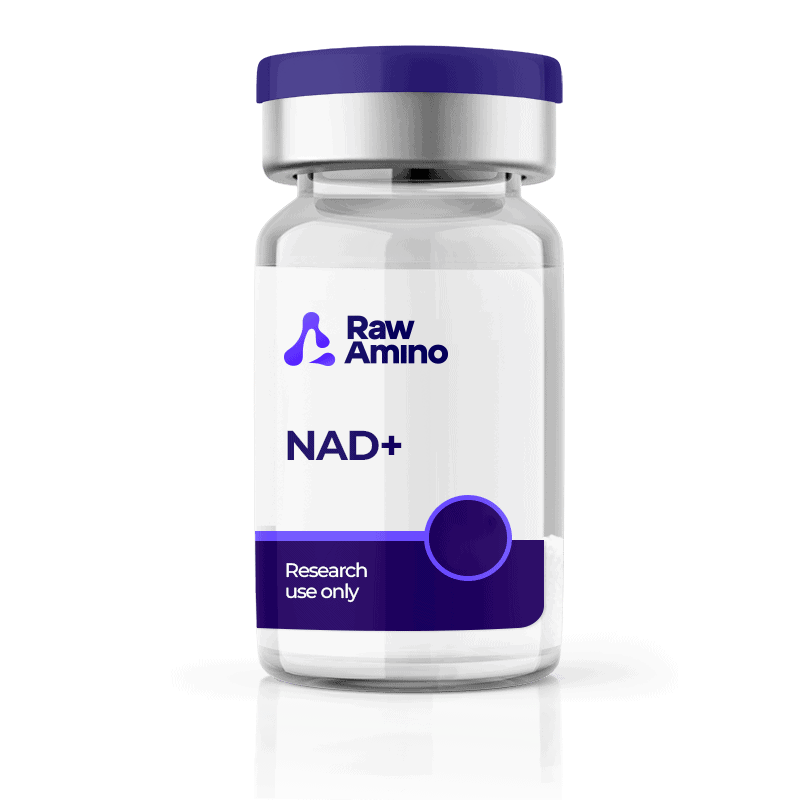
Scientific Overview of Nicotinamide Adenine Dinucleotide (NAD+)
Nicotinamide Adenine Dinucleotide (NAD+) is a naturally occurring oxidized coenzyme that participates in numerous biochemical reactions. It is particularly recognized for its role in electron transfer during cellular respiration, serving as a central mediator in mitochondrial energy conversion. Researchers have proposed that NAD+ may also influence a wide range of biological processes, including regulation of enzymatic activity, post-translational protein modification, and pathways involved in cellular signaling. Because of its broad biochemical relevance, NAD+ is frequently studied in connection with mechanisms of cellular longevity, metabolic control, and responses to oxidative conditions.
Alternative Names: Nicotinamide Adenine Dinucleotide, Beta-NAD, NAD, Endopride
Studies and Research Data
DNA Maintenance
Investigations suggest that NAD+ may play a role in preserving genomic stability through its interaction with enzymes such as poly(ADP-ribose) polymerases (PARPs). These enzymes are thought to utilize NAD+ to attach ADP-ribose units to target proteins, a process that may assist in recruiting DNA repair complexes and loosening chromatin structure to allow access to damaged sites. Research further indicates that NAD+-dependent sirtuins, such as SIRT6, may participate in related repair mechanisms, pointing toward a network of NAD+-linked pathways that potentially contribute to DNA integrity.
NAD+ and Cellular Longevity
Work in cellular and animal models has suggested that declines in NAD+ availability may contribute to features of aging. Reduced levels have been associated with impaired communication between the nucleus and mitochondria, possibly influencing metabolic stability and inflammatory signaling. Findings from experimental studies indicate that restoring NAD+ in aging models may promote more youthful mitochondrial function, potentially mediated by sirtuin family proteins that rely on NAD+ as a cofactor.
NAD+ and Muscle Function
Laboratory studies have explored how NAD+ might influence skeletal muscle performance, particularly in the context of mitochondrial decline. Some experiments in murine systems have reported that supplementation may reverse certain transcriptional changes before they become irreversible, with indications that this could stabilize regulators such as PGC-1-alpha. Researchers have compared these cellular responses to changes that occur with exercise, suggesting overlapping pathways in energy regulation and mitochondrial adaptation.
NAD+ and Neural Processes
NAD+ has also been examined in connection with nervous system resilience. Evidence points to its potential role in reducing reactive oxidative stress, a contributor to cellular damage and age-associated degeneration. Mouse studies have provided preliminary support for its protective influence against the progression of neurodegenerative changes, including those resembling Parkinsonian decline, through mechanisms thought to involve mitochondrial preservation.
NAD+ and Inflammatory Pathways
An enzyme known as NAMPT, associated with inflammatory signaling, has been shown to interact closely with NAD+ metabolism. Increases or decreases in NAD+ levels appear to correlate with changes in NAMPT expression, which may in turn influence pathways linked to obesity, metabolic dysregulation, and cellular stress. This research suggests that NAD+ availability may be relevant to modulating inflammatory responses, though findings remain exploratory.
NAD+ and Cell Viability
Studies using models of oxidative stress and ischemia have proposed that NAD+ may contribute to cell survival under damaging conditions. In neuronal cultures subjected to oxygen-glucose deprivation, experimental supplementation with NAD+ was associated with reduced markers of DNA damage and improved activity of DNA repair enzymes. These observations suggest that NAD+ might act through multiple mechanisms, including sirtuin activation, chromatin remodeling, and support of mitochondrial metabolism.
Conclusion
Nicotinamide Adenine Dinucleotide (NAD+) continues to attract significant research interest due to its central position in cellular energy transfer and signaling. Studies have explored its potential associations with mitochondrial function, DNA repair, inflammatory processes, and neurobiology. While results suggest diverse roles in maintaining cellular balance, findings remain in the domain of laboratory and preclinical research, highlighting the importance of continued investigation into its broader scientific significance.
References
- Matthews RT, Yang L, Browne S, Baik M, Beal MF. Coenzyme Q10 administration increases brain mitochondrial concentrations and exerts neuroprotective effects. Proc Natl Acad Sci U S A. 1998 Jul 21;95(15):8892-7. doi: 10.1073/pnas.95.15.8892. PMID: 9671775; PMCID: PMC21173.
- Shan C, Gong YL, Zhuang QQ, Hou YF, Wang SM, Zhu Q, Huang GR, Tao B, Sun LH, Zhao HY, Li ST, Liu JM. Protective effects of β-nicotinamide adenine dinucleotide against motor deficits and dopaminergic neuronal damage in a mouse model of Parkinson’s disease. Prog Neuropsychopharmacol Biol Psychiatry. 2019 Aug 30;94:109670. doi: 10.1016/j.pnpbp.2019.109670. Epub 2019 Jun 17. PMID: 31220519.
- Mendelsohn AR, Larrick JW. Partial reversal of skeletal muscle aging by restoration of normal NAD⁺ levels. Rejuvenation Res. 2014 Feb;17(1):62-9. doi: 10.1089/rej.2014.1546. PMID: 24410488.
- Wang S, Xing Z, Vosler PS, Yin H, Li W, Zhang F, Signore AP, Stetler RA, Gao Y, Chen J. Cellular NAD replenishment confers marked neuroprotection against ischemic cell death: role of enhanced DNA repair. Stroke. 2008 Sep;39(9):2587-95. doi: 10.1161/STROKEAHA.107.509158. Epub 2008 Jul 10. PMID: 18617666; PMCID: PMC2743302.
- Leung A, Todorova T, Ando Y, Chang P. Poly(ADP-ribose) regulates post-transcriptional gene regulation in the cytoplasm. RNA Biol. 2012 May;9(5):542-8. doi: 10.4161/rna.19899. Epub 2012 May 1. PMID: 22531498; PMCID: PMC3495734.
- Imai S, Guarente L. NAD+ and sirtuins in aging and disease. Trends Cell Biol. 2014 Aug;24(8):464-71. doi: 10.1016/j.tcb.2014.04.002. Epub 2014 Apr 29. PMID: 24786309; PMCID: PMC4112140.
- Sun N, Youle RJ, Finkel T. The Mitochondrial Basis of Aging. Mol Cell. 2016 Mar 3;61(5):654-666. doi: 10.1016/j.molcel.2016.01.028. PMID: 26942670; PMCID: PMC4779179.
- Wątroba, M., Dudek, I., Skoda, M., Stangret, A., Rzodkiewicz, P., & Szukiewicz, D. (2017). Sirtuins, epigenetics and longevity. Ageing research reviews, 40, 11–19. https://doi.org/10.1016/j.arr.2017.08.001
- Gomes AP, Price NL, Ling AJ, Moslehi JJ, Montgomery MK, Rajman L, White JP, Teodoro JS, Wrann CD, Hubbard BP, Mercken EM, Palmeira CM, de Cabo R, Rolo AP, Turner N, Bell EL, Sinclair DA. Declining NAD(+) induces a pseudohypoxic state disrupting nuclear-mitochondrial communication during aging. Cell. 2013 Dec 19;155(7):1624-38. doi: 10.1016/j.cell.2013.11.037. PMID: 24360282; PMCID: PMC4076149.
- Garten A, Schuster S, Penke M, Gorski T, de Giorgis T, Kiess W. Physiological and pathophysiological roles of NAMPT and NAD metabolism. Nat Rev Endocrinol. 2015 Sep;11(9):535-46. doi: 10.1038/nrendo.2015.117. Epub 2015 Jul 28. PMID: 26215259.
- Kang C, Chung E, Diffee G, Ji LL. Exercise training attenuates aging-associated mitochondrial dysfunction in rat skeletal muscle: role of PGC-1α. Exp Gerontol. 2013 Nov;48(11):1343-50. doi: 10.1016/j.exger.2013.08.004. Epub 2013 Aug 30. PMID: 23994518.
Disclaimer:
The products mentioned are intended solely for laboratory research and in-vitro experimentation. They are not approved for human or animal use of any kind. All details provided are for educational purposes only. By purchasing from this site, you agree to comply with our Terms and Conditions.
Reviews
There are no reviews yet.