
Raw amino BPC-157: sizes, blends, prices and research
Everything on raw amino BPC-157 in one place: the two vial sizes, the two blends, what the research shows and how to mix it.
What raw amino BPC-157 is
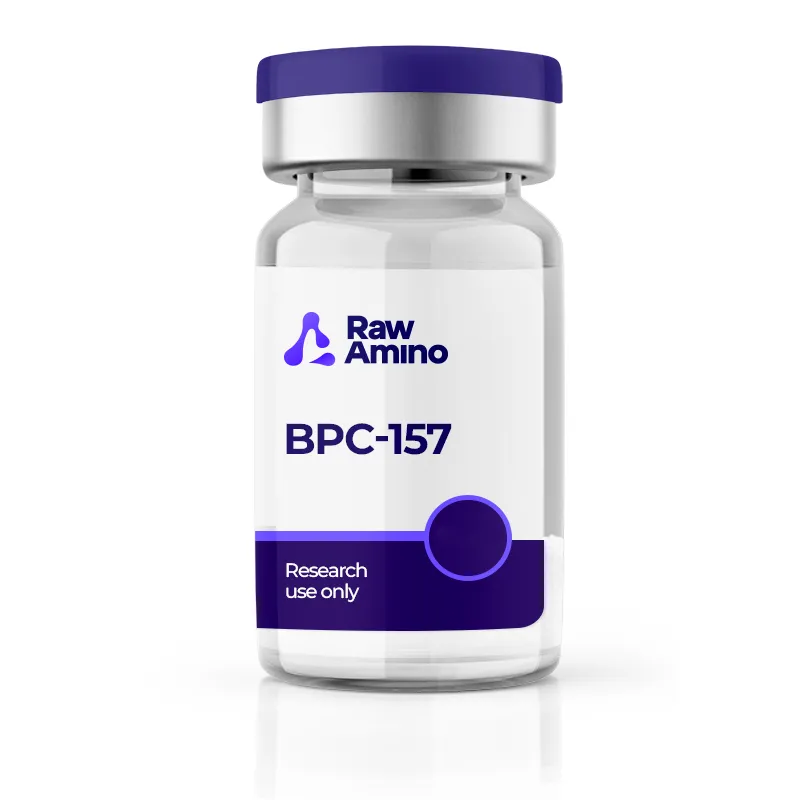
Raw amino BPC-157 is the 15-amino-acid peptide sold in the Raw Amino store as freeze-dried powder in 5mg and 10mg vials. The sequence is a fragment of body protection compound, a protein first described in gastric juice, and it’s one of the most studied research peptides of the last thirty years, almost entirely in rodents.
It isn’t an approved medicine in the US or Europe, and it’s on the WADA prohibited list. Every vial we sell is for laboratory research only.
Raw amino BPC-157 sizes and prices
Pick the size on the BPC-157 product page. The 10mg vial costs less per milligram:
- 5mg vial: $54, about $10.80 per mg
- 10mg vial: $92, about $9.20 per mg
Both sizes ship free worldwide. New customers can also take 10% off with code firstrawamino$$.
BPC-157 blends at Raw Amino
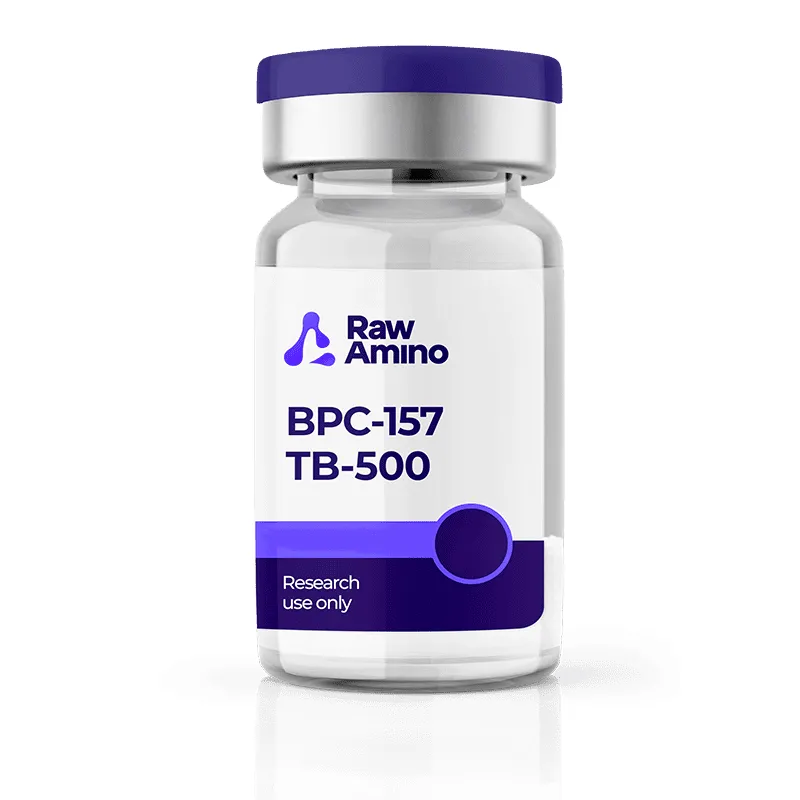
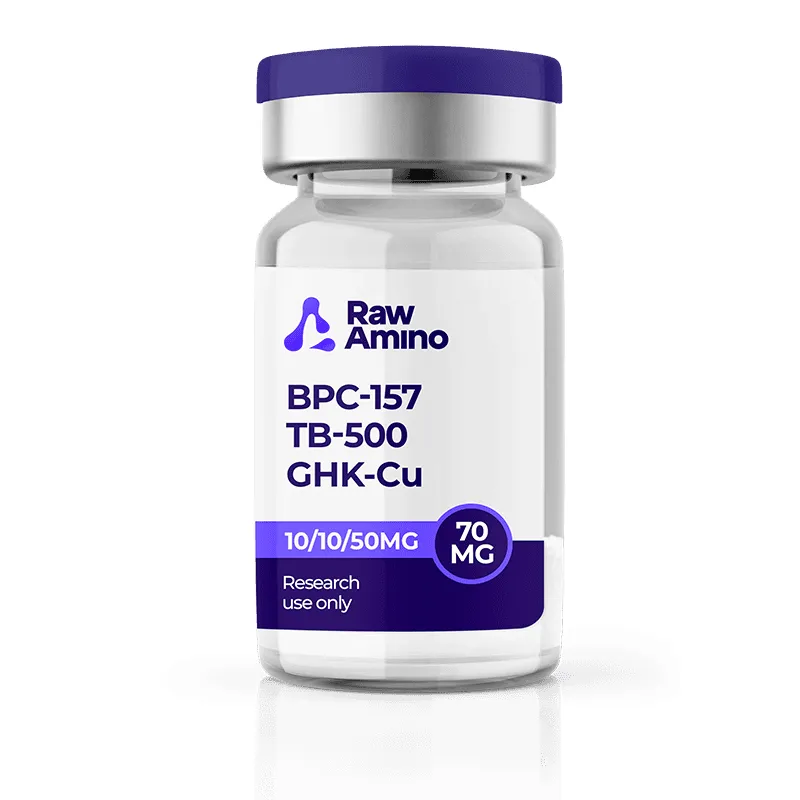
BPC-157 also comes premixed. The BPC-157 TB-500 Blend pairs it with thymosin beta-4 at 10mg or 20mg per vial, and the BPC-157 TB-500 GHK-Cu Blend 70mg adds the copper peptide GHK-Cu. Labs choose a blend when their protocol already pairs these peptides, because one vial means one mixing step and a fixed ratio.
How BPC-157 works in lab studies
Nobody has pinned down a single receptor for it. Lab work points to several routes: more VEGF receptor activity, which feeds new blood vessel growth; effects on the nitric oxide system; and more growth hormone receptors on tendon cells. In cell culture it helps fibroblasts move and spread, part of how tissue closes a wound.
What the research says
Most studies come from Predrag Sikiric’s group at the University of Zagreb, with rodent models of tendon, ligament, muscle and gut injury. Chang and colleagues reported in 2011 that BPC-157 raised growth hormone receptor expression in rat tendon fibroblasts. Controlled human data are thin. The PubMed search for BPC-157 lists the papers.
Mixing and storing raw amino BPC-157
Concentration is the amount in the vial divided by the water you add. Use sterile bacteriostatic water, let it run slowly down the inside of the glass and swirl until the powder is gone; don’t shake it. Keep sealed vials frozen at -20°C, and once mixed, keep the vial in the fridge at 2 to 8°C and use it within about four weeks. A 5mg vial with 2mL of water gives 2.5mg per mL, and a 10mg vial with 2mL gives 5mg per mL.
Related peptides
BPC-157 is usually compared with TB-500, KPV and ARA-290. All of them are on the healing and recovery peptides page, and the raw amino TB-500 guide covers its usual partner. Or go back to the Raw Amino home page.
Which raw amino BPC-157 option to choose
For a first protocol the 5mg vial is usually enough and keeps less solution waiting in the fridge. Longer studies are cheaper with the 10mg vial. If your design already pairs BPC-157 with thymosin beta-4, the blend saves a mixing step and keeps the ratio fixed from the first draw to the last.
Ordering from Raw Amino
All 102 peptides are in stock and ship free worldwide in sealed, labelled vials. New customers save 10% with code firstrawamino$$, and crypto payments get 15% off. You’ll find the amount, the specifications, a mixing chart and the research summary on every product page, which makes comparing options quick.
Raw amino BPC-157 vials and blends
All in stock, with free worldwide shipping.
 BPC-157 5mg / 10mgFrom $54
 BPC-157 TB-500 Blend 10mg / 20mgFrom $110
 BPC-157 TB-500 GHK-Cu Blend 70mg$314
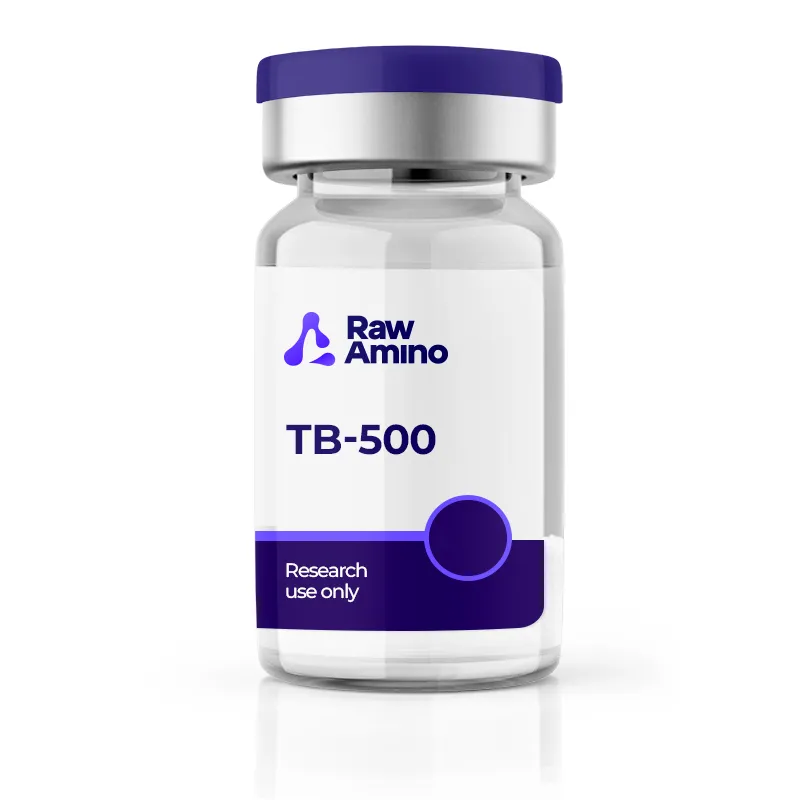 TB-500 5mg / 10mgFrom $78
Raw amino BPC-157 FAQ
What sizes does raw amino BPC-157 come in?
5mg and 10mg vials, plus two blends with TB-500.
How much is it?
$54 for 5mg and $92 for 10mg, with free worldwide shipping.
Is BPC-157 approved for human use?
No. It’s sold for laboratory research only.
Is there a discount?
Yes. New customers save 10% with firstrawamino$$, and crypto orders get 15% off.
Buy raw amino BPC-157
Every peptide is in stock and ships free. New customers save 10% with firstrawamino$$.
Raw Amino products are sold for laboratory research use only. They aren’t for human or veterinary use, and the FDA hasn’t evaluated them.